
VerifEye: Lie Detection With a Camera — Mobile and Fast
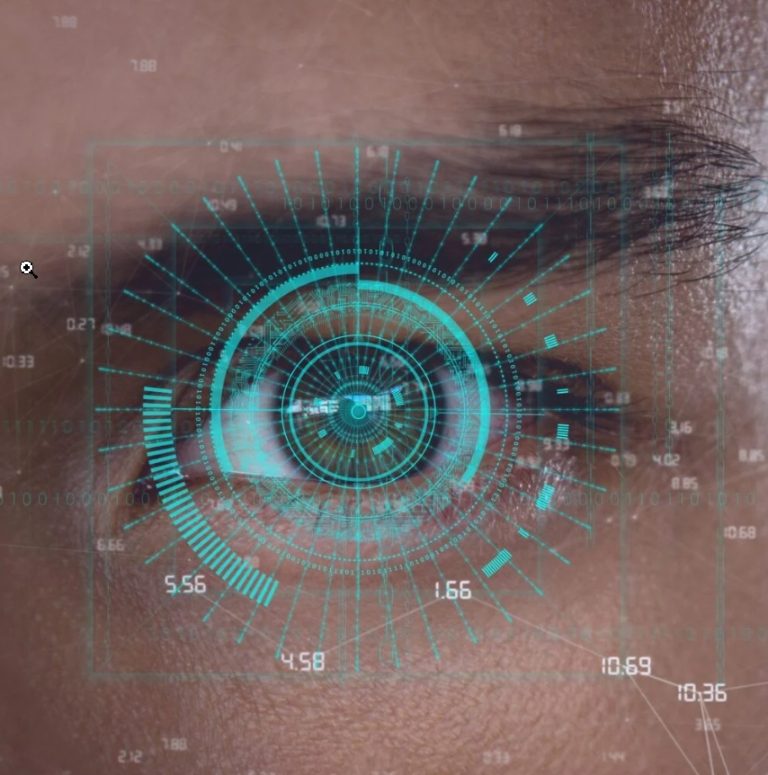
Not every situation allows for a multi-hour examination with sensors attached to the body. Sometimes an account has to be checked quickly, with no set-up, in whatever room is available. That is what VerifEye is for — a mobile technology that captures indicators of deception through the camera of an ordinary smartphone.
What VerifEye measures
While questions are being asked, the camera records the eye. The system evaluates involuntary parameters that cannot be controlled consciously: pupil size, eye movements, blink rate and gaze fixations. The rationale is cognitive — lying takes more mental effort than answering truthfully, and that additional load shows up measurably in eye behaviour. Algorithms then condense the recording into an assessment.
One point deserves emphasis: VerifEye does not measure respiration, pulse or electrodermal activity. It is not a miniature polygraph but a method in its own right, with its own strengths and its own limits. More detail is on the service page for VerifEye mobile lie detection.
How a session runs
It starts with a short explanation and consent. Then the questions are reviewed together — the same principle as with a polygraph: no surprise questions, only yes-or-no formulations about specific facts. The recording follows, with the phone held in a fixed position while the person answers calmly. The test itself takes only a few minutes and the result is available immediately afterwards.
That brevity is the real advantage. An appointment fits into a lunch break, a meeting room or a visit to a client’s premises — anywhere in Germany, with no laboratory equipment.
Where it fits best
Preliminary clarification. Before commissioning a full examination, a short run shows whether there is anything to investigate at all.
Screening several people. If ten employees had access to the stockroom, a fast first round beats ten full testing days.
Private matters. In personal conflicts many people find the wired procedure too formal. A low-threshold format noticeably reduces resistance.
Time-critical cases. When the decision is made today rather than next week.
VerifEye, EyeDetect or polygraph?
The three methods do not compete; they complement each other. VerifEye is mobile, very fast and suited to preliminary assessment and screening. EyeDetect is a standardised computer-based test at a fixed station and provides a firmer basis for personnel checks. The classic polygraph remains the most thorough option, with several parallel recording channels and an extensive pre-test interview — the first choice when a written report has to convince a third party. Our article on how a lie detector test works covers that procedure in full.
A rough rule of thumb: the weightier the decision, the stronger the case for a polygraph. The more people and the less time, the stronger the case for VerifEye.
Consent and the legal side
In Germany the same rule applies to VerifEye without exception: explicit, voluntary and documented consent only. An employer may not order a check, and a refusal must carry no disadvantage. Recordings are covered by data protection law and are used solely for the agreed purpose.
Frequently asked questions
Do I need my own phone? No, the examination is carried out on our device under standardised conditions.
Does it work with glasses or contact lenses? Contact lenses are no obstacle; with glasses the seating position is adjusted. Please mention it beforehand.
Do I get a written result? Yes, on request, with the question protocol and an assessment for each item.
What does it cost? Considerably less than a full polygraph examination. The online calculator gives an indication in a minute.